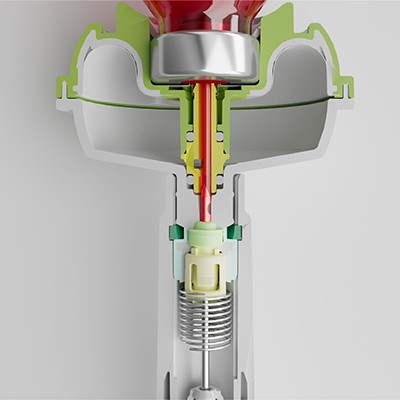
Intravenous (IV) applications represent one of the most fundamental and frequently used therapeutic methods in modern healthcare. Fluid therapy, medication administration, blood product transfer, and parenteral nutrition all depend on reliable and controlled infusion systems. Therefore, safety and pressure management in IV systems are not merely technical requirements but critical components of patient safety.
IV infusion systems operate primarily under two principles: gravity-based and pump-driven mechanisms. Gravity systems rely on height difference to create flow, while pump systems ensure controlled pressure and constant flow rate.
However, both systems face potential risks such as:
Modern IV sets are therefore engineered with pressure resistance, controlled flow design, and secure connection mechanisms.
Why High Pressure Resistance Matters
In interventional procedures, angiography, and intensive care environments, IV systems must withstand specific PSI levels. Stopcocks, manifolds, and high-pressure rotators play a vital role in ensuring system stability.
High pressure resistance:
✔ Prevents leakage
✔ Reduces disconnection risk
✔ Improves dosing accuracy
✔ Enhances clinical safety
Safety-Oriented Design Components
Modern IV systems typically include:
These elements ensure system integrity and minimize clinical risk.
In IV applications, safety extends beyond sterility. Pressure control, secure connections, and compliance with international standards define the foundation of modern infusion systems. A robust IV infrastructure remains a silent yet essential contributor to therapeutic success.